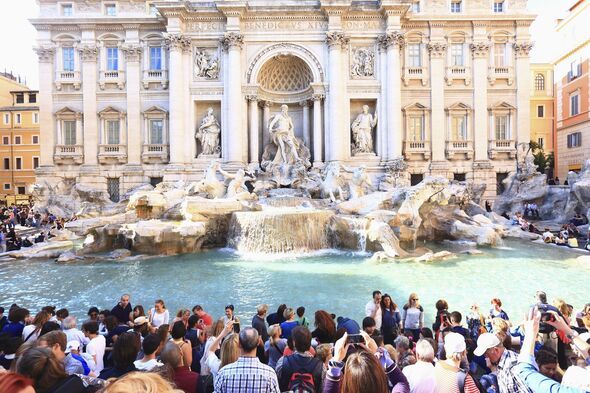
Tourists visiting Rome will soon face a small fee to get close to the world-famous Trevi Fountain, as the city moves to tackle overcrowding at one of its most iconic landmarks. Starting February 1, 2026, visitors who wish to approach the 18th-century Baroque monument will be required to pay €2 (£1.75), city authorities announced.
While the coins thrown into the fountain continue to be donated to charity, the new entrance fee will be collected by Rome's municipal authority to fund the maintenance and management of tourist flows. Officials estimate that the levy could generate around €6.5 million a year from the Trevi Fountain alone.
Mayor Roberto Gualtieri described the fee as a modest measure to address overcrowding, telling Reuters on Friday: "Two euros isn't very much and it will lead to less chaotic tourist flows."
The charge is part of a wider overhaul of Rome's tariff system for museums and monuments, which is designed to strike a balance between accessibility for residents and management of tourist traffic.
Under the new system, a number of attractions that currently charge entry will become free for residents of Rome, including the Sacred Area of Largo Argentina, while tourists and non-residents will have to pay to access select sites such as the Trevi Fountain and the Napoleonic Museum.
Certain groups will be exempt from the fees, including children under five, people with disabilities, and an accompanying person.
Tourists will still be able to admire the Trevi Fountain from a distance without paying, preserving the ability to enjoy the landmark without contributing to congestion.
The fountain, designed by Nicola Salvi in the 18th century, is currently visited by around 30,000 people each day, making it one of Rome's most crowded attractions.
Following restoration work completed last year, the city introduced a queuing system to prevent large crowds from gathering too close to the fountain, and access is now capped at 400 people at a time.
City officials say the fee is part of a broader effort to ensure that Rome's historic landmarks are preserved for future generations while managing the pressures of mass tourism.
The measure follows similar initiatives in other European cities, where authorities have increasingly introduced charges or visitor limits to reduce the impact of large tourist numbers.
By implementing the Trevi levy, Rome hopes to improve the visitor experience, prevent overcrowding, and generate funds to maintain one of its most treasured cultural sites.
Contact to : xlf550402@gmail.com
Copyright © boyuanhulian 2020 - 2023. All Right Reserved.