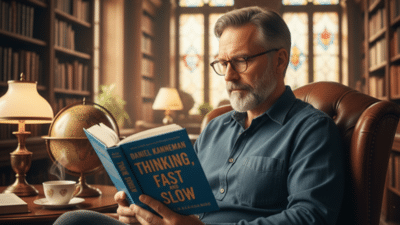
The modern digital world has its own pros and cons - it rewards quick adaptability, speed of tasks and deep focus, yet at the same time it also amplifies bias, scatters attention and often creates new kinds of complexity. In this perplexity, reading the right books can really be helpful in navigating the purpose, to build essential habits and set frameworks so you don't just survive the digital age but also excel in it. Here are five books that will help you concentrate your attention, build long-lasting habits and give you perspective to understand how the human mind actually decides or how digital products capture attention.
1. Deep Work (2016) - Cal Newport
 The core idea of the book seems to be about distraction-free work or focused work that produces rare and valuable results. As the digital era prizes speed and visibility so endless notifications, meetings or multitasking erode deep concentration and the antidote is sustained focus - how you learn complex skills, create original work and ultimately produce high-value outcomes.
2. Atomic Habits (2018) - James Clear
 The book tries to show how tiny changes compound into major results. The world we are sharing today presents endless options, which becomes a kind of distraction so focusing on small habits and developing them provides the scaffolding for skill development or helps to develop disciplined attention. Because it is habits that are the practical engine behind deep work or learning or wellbeing.
3. Thinking, Fast and Slow (2011) - Daniel Kahneman The author in the book talks about the two systems that govern thinking. System 1, fast, intuitive and System 2, slow, deliberative. The book tells, awareness of biases lets you make better decisions.
The algorithmic world pushes us to take quick decisions or surface-level reactions. So understanding cognitive biases helps an individual to evaluate information, resist misleading headlines and make better choices for oneself and others.
4. Algorithms to Live By (2016) - Brian Christian & Tom Griffiths
 The core idea of the book shows classical computer science algorithms that can be sorting, caching, exploration vs exploitation mapped onto everyday human decisions; applying them gives better solutions in a world that is information-saturated.
5. Hooked: How to Build Habit-Forming Products (2014) - Nir Eyal Talked about the digital products that mostly use a four-step Hook Model (Trigger → Action → Variable Reward → Investment) to form user habits.
Explore the latest trends and tips in Health & Fitness, Spiritual, Travel, Life Hacks, Trending, Fashion & Beauty, and Relationships at Times Life!
FAQs
Q1. What are the 5 pillars of digital transformation?
Ans: Digitizing Operations, Technology, Culture, Leadership, and Customer Experience
Q2. What are the 3 C's of change leadership?
Ans: Communicate, Collaborate, Commit
Q3. What are the 3 A's of leadership?
Ans: Authenticity, Approachability and Accountability
Contact to : xlf550402@gmail.com
Copyright © boyuanhulian 2020 - 2023. All Right Reserved.