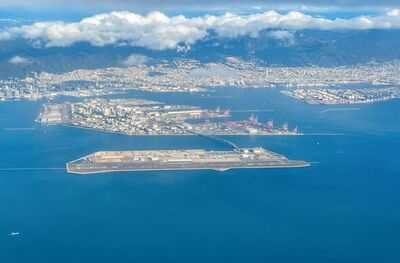
Questions are being raised about a major civil engineering project, as its future remains uncertain. Kansai International Airport (KIX) in Japan was heralded as a landmark achievement in civil engineering when it was completed in 1994.
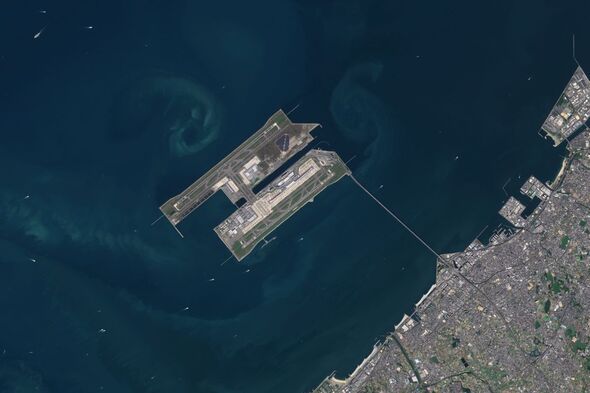
Even today, it remains one of the most ambitious infrastructure projects of its kind. The airport was built on two artificial islands in Osaka Bay, which are connected to the mainland by a 1.9-mile bridge. But despite its impressive innovative structures, it is now sinking into the sea. So far, it has sunk around 38 feet, nearly 12 metres. Despite this, it continues to charter flights which fly all over Asia.
The airport's engineers knew it was sinking slightly but said it should settle over a 50-year period.
According to the experts, they said it would stabilise at 13 feet, the minimum elevation needed to prevent flooding.
But after just six years of its opening, parts of the two artificial islands had already reached the threshold. Efforts have been made to save the airport and the islands.
Some £117 million was spent on raising the seawall, but some engineers believe that this is too little, too late.
In 2018, Typhoon Jebi struck Osaka Bay, overwhelming the seawall and flooding the runway, resulting in a two-week disruption.
This incident prompted further upgrades, including the raising of the seawall by an additional 2.7 metres to guard against future flooding.
Some predictions believe that, by 2056, sections of the islands may well sink more than 13 feet (four metres) to sea level.
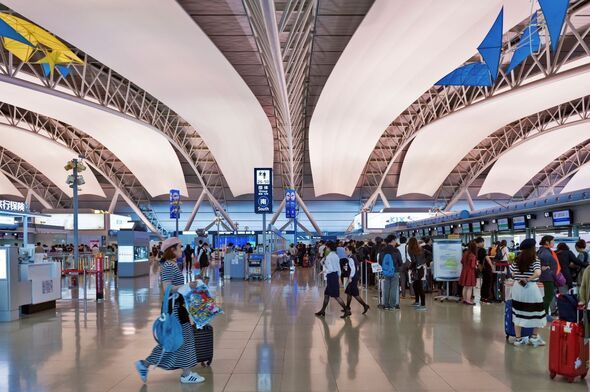
In total, 25% of all foreign visitors to Japan entered the country through KIX last year.
Currently, the airport is undergoing a $740 million (£581 million) renovation, aimed at increasing capacity and further solidifying its role as a key regional transport hub.
Contact to : xlf550402@gmail.com
Copyright © boyuanhulian 2020 - 2023. All Right Reserved.