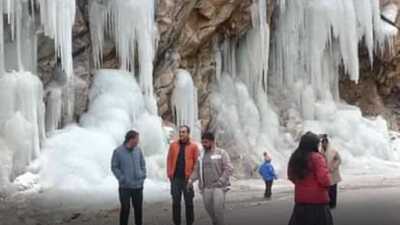
Uttarkashi: A severe cold wave has gripped Uttarakhand, freezing rivers, streams, and waterfalls in the high Himalayan regions. In Gangotri Dham, temperatures have plummeted to minus 10 degrees Celsius, creating harsh conditions for locals, pilgrims, and forest personnel.
Natural water sources in Uttarkashi and Gangotri have frozen completely. Locals are struggling as iron water pipes have burst due to the freezing temperatures. To meet daily needs, frost-covered snow is being melted with fire. Forest officials reported that frozen streams along the Gomukh trek have made paths slippery, increasing the risk of accidents.
Temperature detailsAccording to Forest Inspector Rajveer Rawat, the minimum temperature in Gangotri Dham ranges between minus 1 and minus 10 degrees Celsius, while the maximum temperature in Harsil Valley remains around 4–5°C during the day. After evening, temperatures drop rapidly, reaching minus 8°C by late night.
Wildlife monitoringDespite the extreme cold, forest officials are working to protect rare wildlife in Gangotri National Park. Around 50 trap cameras have been installed between 10,000 and 13,000 feet above sea level in areas like Gomukh, Kedarnath, and Nelang Valley. These cameras help monitor poaching activities and track the movements of endangered species such as snow leopards, Bharals, brown bears, and musk deer.
Last Tuesday, forest personnel led by Inspector Rajveer Singh Rawat conducted a routine patrol on the Gangotri-Gomukh trek. They found frozen water sources at several points, highlighting the severity of the cold wave.
Challenges for locals and officialsThe freezing of drinking water lines has created major problems at the Dham. Locals are facing water shortages, while forest staff are finding it difficult to perform duties in such extreme weather. The cold wave has affected not only the hilly regions but also the plains, making daily life challenging across Uttarakhand.
Cold wave continues to dominate Uttarakhand hills amid dry weatherWith no recent snowfall or rainfall, the cold wave continues to dominate Uttarakhand’s high-altitude regions. Authorities are focusing on both human safety and wildlife protection, ensuring that poaching is prevented and rare species are monitored. The situation reflects the harsh realities of Himalayan winters, where survival depends on resilience and adaptation.
Contact to : xlf550402@gmail.com
Copyright © boyuanhulian 2020 - 2023. All Right Reserved.