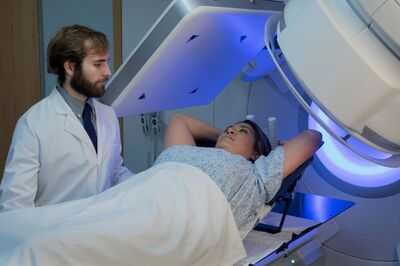
A new blood test has been developed which could “transform” how the NHS monitors and treats breast cancer.
The test can identify what type of cancerwithout the need for a full biopsy meaning patients can quickly be put on the treatment most likely to work. Currently an invasive biopsy is generally needed to cut out a piece of the tumour, which takes longer to analyse.
In one in five patients the type of breast canceralso changes during treatment, which can cause the treatment to stop working or be less effective. A trial of 86 breast cancer patients by the Institute of Cancer Research in London showed the test is 90% accurate in identifying this crucial switch.
• 'I couldn't get upstairs without gasping for air — and the truth was devastating'
• 'Laughter and song will fill my Christmas even though it may be my last'
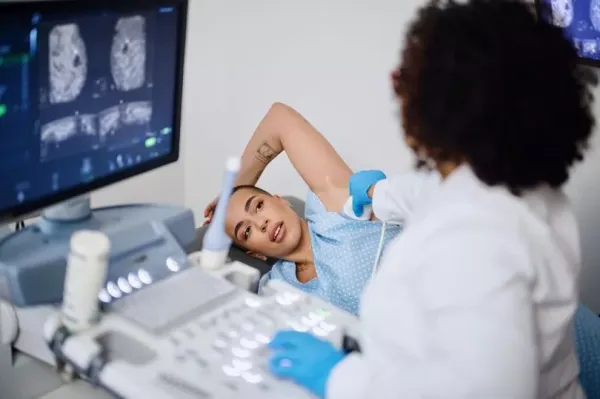
Nicholas Turner, professor of molecular oncology at the ICR and oncologist at The Royal Marsden NHS Foundation Trust, said: “Treating breast cancer based on its type is the mainstay of breast cancer management but until now, a tissue biopsy has been required to detect that type, and biopsies are generally only taken at diagnosis. Cancers can adapt and evolve and if we continue treating it based on its initial form, we are unlikely to succeed.
“Our research is the first to show that it is possible to identify breast cancer’s type from a blood test – meaning that any changes to this type can be tracked easily over time, and treatment can be altered if necessary.”
There are many different types of breast cancer, such as oestrogen receptor positive, human epidermal growth factor receptor 2 positive (ER+/HER2+) breast cancer - which accounts for one in 10 cases. Breast cancers are treated with a personalised mix of surgery, radiotherapy, chemotherapy, hormone therapy, targeted drugs and immunotherapy.
Which treatment or combination is often a life-or-death decision made based in large part on what medics believe to be the type of cancer. The new blood test looks for tumour DNA released into the bloodstream by cancer cells and experts say it offers hope for the treatment of all cancers.
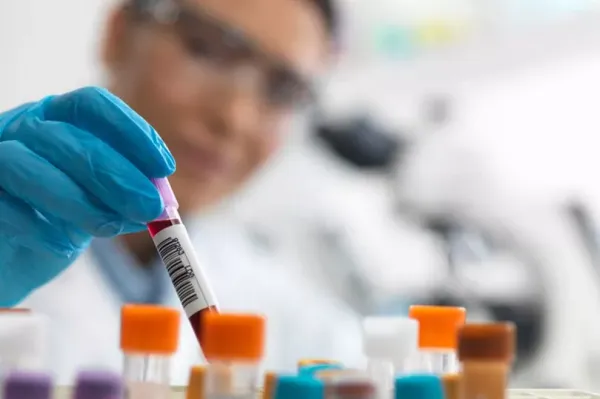
That is because researchers say the technology behind the Breast Circulating Methylation Assay (BCMA) could be applied to many types of the disease. Professor Kristian Helin, Chief Executive of The Institute of Cancer Research, London, said: “We have long moved past treating a cancer based simply on its place of origin – breast cancer is a whole family of diseases which all require different treatment strategies.
"But treatment resistance is one of the biggest problems we want to overcome as cancer researchers. Identifying when a cancer is likely to stop responding to a particular treatment is crucial. This is a step towards a future of cancer care that is smarter, faster and kinder.”
Scientists analysed 191 blood samples and compared the results to two tissue samples taken over five years apart and the trial showed breast cancer switched type in 19% of the patients. Some 8% of biopsies showed cancer had switched type, while the blood test showed both types of cancer were present at the same time. Crucially this meant some patients could benefit from two specific drugs at one time to stop the disease progressing.
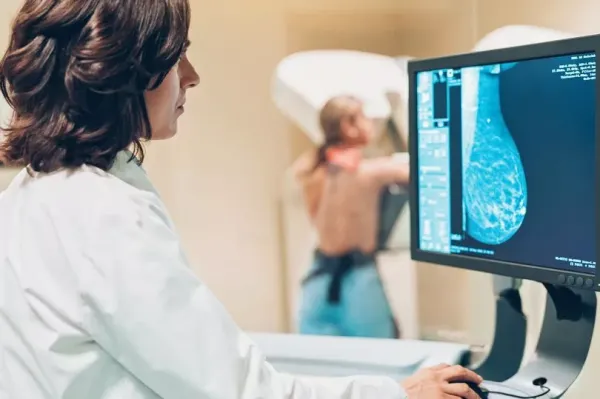
Dr Simon Vincent, chief scientific officer at Breast Cancer Now said: “With around 11,500 women dying from breast cancer every year in the UK, we desperately need to find better ways to treat the disease. This innovative blood test has the potential to transform how we monitor and treat breast cancer, ensuring people receive the most effective therapies as early as possible. While we need further research and clinical trials before this test can be used in routine care, these early results are hugely promising.”
The study, presented at the San Antonio Breast Cancer Symposium, involved analysing blood samples from breast cancer patients in five separate clinical trials. The test will now be assessed to try to show that it improves survival chances for patients when they are followed for a number of years afterwards.
Contact to : xlf550402@gmail.com
Copyright © boyuanhulian 2020 - 2023. All Right Reserved.