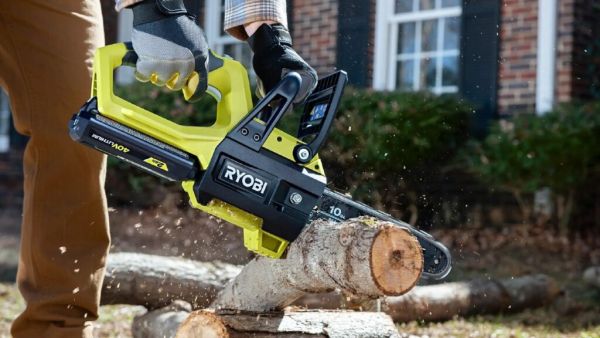
If you ask the average American about a company called Techtronic Industries (TTI), chances are they’ll give you a bewildered look and walk away. The reaction wouldn’t be surprising, given that outside of industry analysts and people with deep insights about the tool industry, not many people have heard of TTI. Now, if you flip the question around a bit and ask the same average citizen if they have heard of either Ryobi Tools or Milwaukee Tools, there is a good chance they’ll nod their head in agreement.
There’s no denying this. Ryobi and Milwaukee are two of the most popular major tool brands in the U.S. They have been around for decades and have become familiar household names over time. While Milwaukee is a known player in the professional-grade tool space, Ryobi is a name people associate with smaller projects and is particularly popular among DIY enthusiasts. Plus, you need to go to a Home Depot to buy Ryobi products. Now, in case you haven’t already guessed, both Ryobi and Milwaukee are owned by the same little-known company we talked about earlier — TTI. So, technically, it wouldn’t be entirely wrong to say that Ryobi chainsaws are, indeed, made by the same company that also makes Milwaukee tools.
What makes this revelation even more unusual is that Milwaukee is known as a traditional American company, tracing its origins back to the 1920s. Ryobi, on the other hand, was founded in 1943, nearly 20 years after Milwaukee. However, for the initial years of its life, Ryobi had nothing to do with the U.S., given that it was headquartered in Japan.
How the connection between Ryobi and Milwaukee happened
Until the early 2000s, Milwaukee and Ryobi Tools had virtually nothing to do with each other and operated in their own silos. Both of these companies underwent multiple ownership changes in the years preceding. In the case of Ryobi, it started life in Japan as Ryobi Seisakusho Co., Ltd. in 1943, founded by Yutaka Urakami. The company’s initial focus was on die-cast products and printing presses before entering the power tools market in the 1960s. Ryobi also dabbled with several other product categories, ranging from the assembly of offset printing presses and door closers to fishing tackle. The Japanese economic crisis in the 90s eventually led Ryobi to shutter several of its loss-making ventures, including its overseas power tools business, which was purchased by Ryobi Tools’ current owners. Note that Ryobi remains a major player in the die casting space even today.
As for Milwaukee Tools, its origins date back to 1918, when A.H. Petersen, a young fabricator, was signed up by Henry Ford to produce a new power drill. Petersen would later partner with Albert F. Siebert, culminating in the formation of the A.H. Petersen Company. This company wouldn’t last long, as the very next year — 1923 — the manufacturing facility was destroyed in a fire. Siebert would eventually purchase what was left of the A.H. Petersen Company and renamed it the Milwaukee Electric Tool Corporation in 1924. The company was purchased by Amstar in 1975, which then sold it to Merrill Lynch in 1986, which then sold it to Atlas Copco in 1995. A decade later, Milwaukee’s current owner, Techtronic Industries, would purchase it, thereby bringing Ryobi and Milwaukee under a single ownership, with some of their products even sharing the same factory.