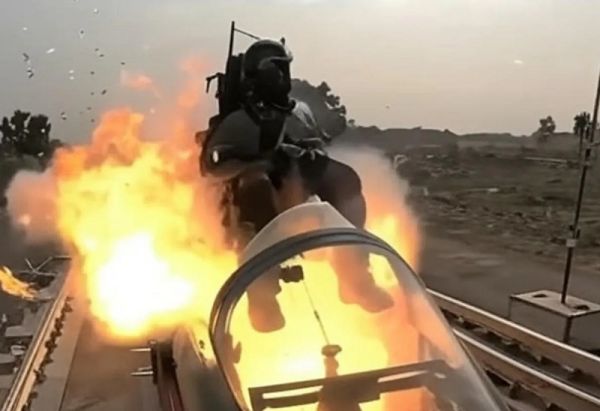
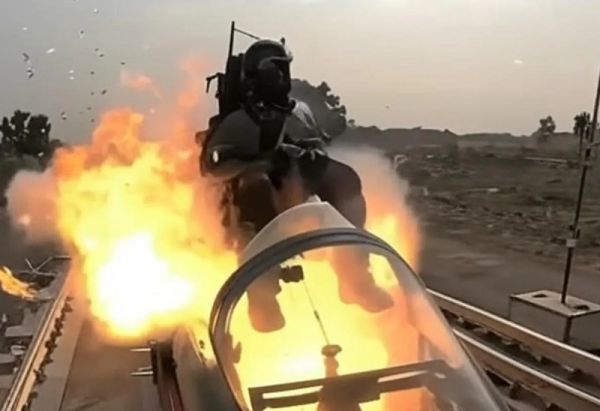
New Delhi. Defense Research and Development Organization (DRDO)’s high-speed rocket sled trial of the emergency rescue system (escape system) of fighter aircraft was successful. The test was conducted at the Rail Track Rocket Sled Facility of Terminal Ballistics Research Laboratory, Chandigarh. In the trials, the rescue system was operated at a speed of exactly 800 kilometers per hour, which mimics the situation of a high-flying fighter plane in the air. With this success, India has joined the list of select countries which have the capability to test such complex rescue systems with indigenous technology.
Read this also South Africa beats India by 4 wickets in second ODI, series level 1-1
During the trial which saved the pilot’s life, precise speed was achieved by placing the front part of the Tejas fighter aircraft on two rocket sleds and firing multiple rocket motors. During this, the cockpit glass broke safely, the seat came out and the dummy pilot landed completely safely with the parachute. All phases (glass breakage, seat ejection and pilot recovery) were completely successful. This trial was more complex than static trials and closer to the real situation.
Dependence for pilot rescue seats will end
Defense Minister Rajnath Singh has congratulated DRDO, Air Force, Aeronautical Development Agency and Hindustan Aeronautics Limited (HAL). He called it a big step towards self-reliant India. DRDO Chairman Dr. Sameer V Kamat also congratulated the entire team. With this achievement, India will no longer have to depend on foreign technology or testing facilities for pilot rescue seats. This will further strengthen the security of the upcoming indigenous fighter aircraft including Tejas.
Contact to : xlf550402@gmail.com
Copyright © boyuanhulian 2020 - 2023. All Right Reserved.