
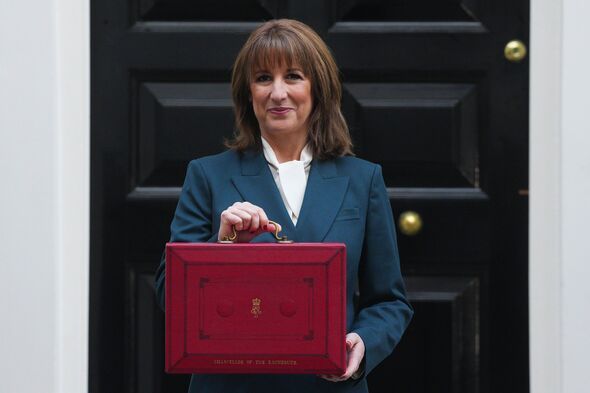
Brits who are planning to jet off on holiday after April 1 next year are likely to face airfare hikes due to a rise in Air Passenger Duty (APD), which was announced in last week's Budget.
Rachel Reeves announced that air passengers will face an above-inflation rise in APD from April 1, 2026, followed by a further rise which will be linked to inflation on April 1, 2027. APD is typically included in a ticket price, meaning Brits could see hikes in their air fares when booking. The duty is paid for each passenger on chargeable flights, and the amount is based on factors such as the flight distance and the passenger's seat pitch, so those with more spacious seats in premium economy pay a higher amount.
There are four bands of APD, one for domestic flights, then Band A for distances of up to 2,000 miles, Band B for flights between 2,001 and 5,500 miles, and Band C for long-haul jaunts of over 5,500 miles. Here are the current rates of APD for economy passengers, and how much they'll increase in 2026 and 2027.
Band | Current APD rate | From April 1, 2026 | From April 1, 2027 |
UK domestic | £7 | £8 | £8.26 |
Band A | £13 | £15 | £15.49 |
Band B | £90 | £102 | £105.33 |
Band C | £94 | £105 | £109.46 |
The rates are higher for those in classes above economy. For example, those on Band C flights will pay £261.25 each from 2027, meaning a family of four jetting off to a long-haul destination in premium economy will be paying over £1,000 in APD. A flight to Europe in any class above economy will be taxed at £33.04 per passenger, whereas a family of four with kids under 16 will fork out £30.98 to fly to European destinations such as Spain, Italy and France.
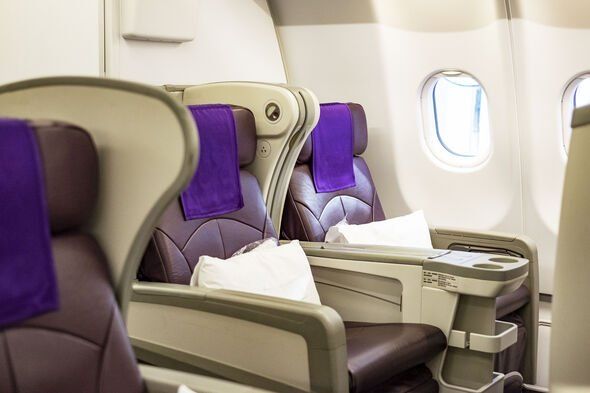
However, there are ways to avoid paying the fee as well as ways passengers can reduce their APD bill. The first is, somewhat obviously, not to fly but to take another mode of transport such as the train. As that won't work for many, it may be more helpful to know that children under 16 flying in economy, as well as children under two in all classes, aren't charged APD.
Other exemptions apply to flights to and from the Scottish Highlands, as well as those from Belfast and Dublin. Many passengers on transatlantic flights choose a flight that connects through Dublin, as they don't have to pay APD in the leg between the Irish airport and the USA, which tends to bring the fare down. Eligible passengers can also pass through U.S. immigration prescreening at Dublin Airport, which means there's less time spent queuing when you arrive.
Another option for long-haul passengers is to choose a connecting flight via a European city. While a connecting flight can be less convenient, it means you only pay APD for travelling between the UK and Europe, potentially cutting the cost of your journey.
Critics of APD include Willie Walsh, former chief executive at British Airways, who said APD was a "cash grab masquerading as a green tax.", while others have pointed out that despite having some of the highest rates of flight taxes in the world, passenger numbers continue to rise each year, meaning the tax doesn't encourage people to take fewer flights.
However, there have been some supporters of the tax hike. Writing for the Mirror in 2024, Anna Krajinska, UK director at Transport & Environment, said: "For too long, the aviation industry has been polluting with impunity. They reap the benefits of government investment but cause irreversible damage to the climate in the process."
She added that the aviation industry is "criminally undertaxed in the UK" pointing out: "It is not subject to taxation on the fuel it consumes and is minimally taxed for some of its emissions. Every driver that fills up their car with petrol or diesel has paid more fuel duty than any airline has ever paid in the UK."
Anna also pointed out that 15% of people were responsible for 70% of all the flights in the UK, adding: "Think about the fact that Air Passenger Duty rises will actually be hitting those who are responsible for longer flights much more - wealthy individuals flying to expensive, exotic destinations and businesses flying their employees around the globe, both of whom can afford to absorb the cost of the climate damage that they cause."
Contact to : xlf550402@gmail.com
Copyright © boyuanhulian 2020 - 2023. All Right Reserved.