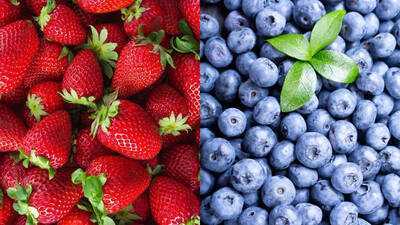
Strawberries, blueberries, and grapes stand out as nutrient powerhouses among fruits, each bringing unique profiles of vitamins, antioxidants, and minerals that support everything from immunity to heart health, though they vary significantly in calorie density and sugar content. Per 100 grams, strawberries clock in at just 32 calories with exceptional vitamin C, blueberries offer 57 calories packed with brain-boosting compounds, and grapes hit 67 calories driven by natural sugars but rich in B vitamins. This detailed comparison breaks down their nutrients, calories, daily integration tips, and benefits to help choose the best for balanced nutrition.
Strawberries
Strawberries lead with 58.8 mg vitamin C per 100g—covering 61% of daily needs—alongside 24 µg folate (six times more than grapes), 0.386 mg manganese, vitamin E (0.29 mg), and 2g fiber for superior antioxidant and digestive support. They provide 153 mg potassium, 0.41 mg iron, 24 mg phosphorus, and low sugars at 4.89g with 7.68g total carbs, making their 32 calories per 100g highly efficient for weight management. Additional perks include 400% more vitamin A than grapes, plus minerals like magnesium (13 mg) and zinc (0.14 mg), positioning strawberries as a low-glycemic immunity booster.
Blueberries
Blueberries shine with higher vitamin K (19.3 µg per 100g), manganese (0.336 mg), vitamin C (9.7 mg), and B vitamins, delivering 2.4g fiber—three times grapes' amount—for optimal gut and cognitive health. At 57 calories per 100g, they balance 14.5g carbs, 10g sugars, and notable protein (0.74g), enriched by polyphenols like anthocyanins that outperform other berries in brain protection. They also supply potassium (77 mg), iron (0.28 mg), and anti-inflammatory compounds, though lower in folate compared to strawberries.
Grapes
Grapes excel in vitamin K (14.6 µg), B vitamins like B1 (0.092 mg, 283% more than strawberries), B2 (0.057 mg), B6 (0.11 mg), and manganese (0.718 mg covering 17% daily needs), plus 191 mg potassium for electrolyte balance. Their 67 calories per 100g stem from 17.15g carbs and 16.25g sugars, with only 0.9g fiber and modest vitamin C (4 mg), but resveratrol adds anti-aging prowess. They offer copper (0.04 mg), phosphorus (10 mg), and hydration from 81.3g water, though higher saturated fat (0.114g) slightly edges others.
Which is more nutritious
Strawberries emerge victorious for highest nutrient density per calorie, dominating vitamin C, folate, and low sugar (68% less than grapes), ideal for immunity and low-carb diets. Blueberries follow closely with superior fiber and vitamin K for brain and heart benefits, while grapes trail due to elevated calories and sugars but win on B vitamins and manganese. No single fruit reigns supreme—strawberries suit weight loss, blueberries cognition, grapes hydration—rotating them maximizes broad-spectrum nutrition.
How to add to daily diet
Blend strawberries into morning smoothies, top oatmeal or yogurt parfaits, or slice into salads for effortless vitamin C boosts without added calories. Scatter blueberries over pancakes, mix into overnight oats, or snack frozen for portable brain fuel and steady energy. Freeze grapes for hydrating pops, pair with cheese platters, or muddle into infused water to curb sweet cravings healthily. Strawberries slash inflammation, fortify collagen for skin glow, and regulate blood sugar via fiber and polyphenols. Blueberries enhance memory, protect eyes from age-related decline, and stabilize cholesterol. Grapes aid digestion, bolster cardiovascular health with resveratrol, and support bone density through vitamin K.
Contact to : xlf550402@gmail.com
Copyright © boyuanhulian 2020 - 2023. All Right Reserved.