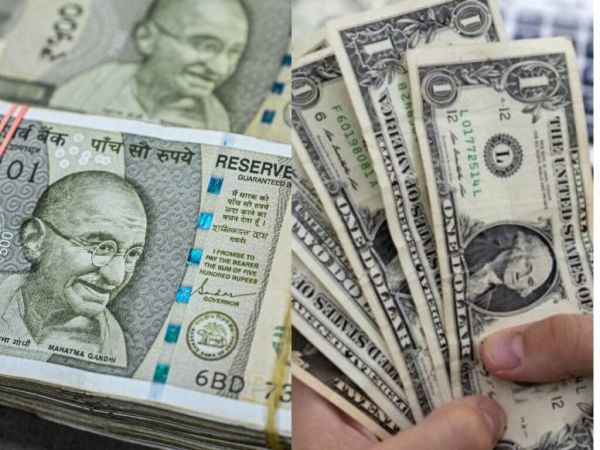
The Indian rupee fell to a new all-time low of 89.85 against the US dollar in early trade on Tuesday, declining 32 paise from its previous close amid persistent foreign fund outflows and a firm American currency overseas. The currency opened at 89.70 at the interbank foreign exchange market before slipping to its lowest level on record.
On Monday, the rupee had briefly touched 89.79 during intraday trade and eventually settled at 89.53 against the US dollar.
Forex dealers attributed Tuesday’s fall to strong dollar demand from corporates, importers and foreign portfolio investors, compounded by elevated crude oil prices, which continues to dampen investor conviction.
How RBI Is Managing The Rupee Volatility
Market participants pointed to the Reserve Bank of India’s active role in managing volatility.
“The RBI has been selling dollars in the market, but it has also bought dollars when the Indian Rupee rose thus keeping the demand intact,” Business Standard quoted Anil Kumar Bhansali, Head of Treasury and Executive Director at Finrex Treasury Advisors LLP.
According to a PTI report, Bhansali noted that India’s broader economic fundamentals remain strong, underpinned by 8.2 per cent GDP growth, but the rupee continues to face external headwinds.
“The uncertainties surrounding the India-US trade deal have not helped the matter and have actually aggravated the dollar buying syndrome,” he added.
Effect of Global Market
The US dollar index remained elevated at 99.41, signalling the greenback’s sustained strength in global markets. Meanwhile, Brent crude traded at USD 63.15 per barrel, a level that continues to unsettle Indian markets given the country’s high reliance on imported oil.
Equity markets were also subdued. The Sensex slipped 223.84 points to 85,418.06, while the Nifty declined 59 points to 26,116.75 in early Tuesday trade. Foreign Institutional Investors continued their selling spree, offloading Rs 1,171.31 crore worth of equities on Monday.
Domestic Weakness Adds to The Fall of Rupee
According to an ET report, multiple triggers had compounded the rupee’s decline. These included:
Delay in the US–India trade deal, despite repeated assurances from policymakers
Uncertainty around the US government shutdown, which helped strengthen the dollar
Short covering in currency markets
Weak domestic macroeconomic data, particularly the PMI numbers
India’s private sector activity falling to a six-month low
Manufacturing PMI slipping to 59.9
Composite PMI dropping to 57.4, its lowest in nine months
A higher-than-expected trade deficit, exerting additional pressure on the rupee
“These combined global and domestic cues created negative sentiment, leading to the sharp fall we saw on Friday,” ET report says quoting an expert.
Zubair Amin is a Senior Journalist at NewsX with over seven years of experience in reporting and editorial work. He has written for leading national and international publications, including Foreign Policy Magazine, Al Jazeera, The Economic Times, The Indian Express, The Wire, Article 14, Mongabay, News9, among others. His primary focus is on international affairs, with a strong interest in US politics and policy. He also writes on West Asia, Indian polity, and constitutional issues. Zubair tweets at zubaiyr.amin
The post Rupee Sinks To Record Low Of 89.85: What’s Driving The Sharp Fall Against The Dollar? appeared first on NewsX.
Contact to : xlf550402@gmail.com
Copyright © boyuanhulian 2020 - 2023. All Right Reserved.